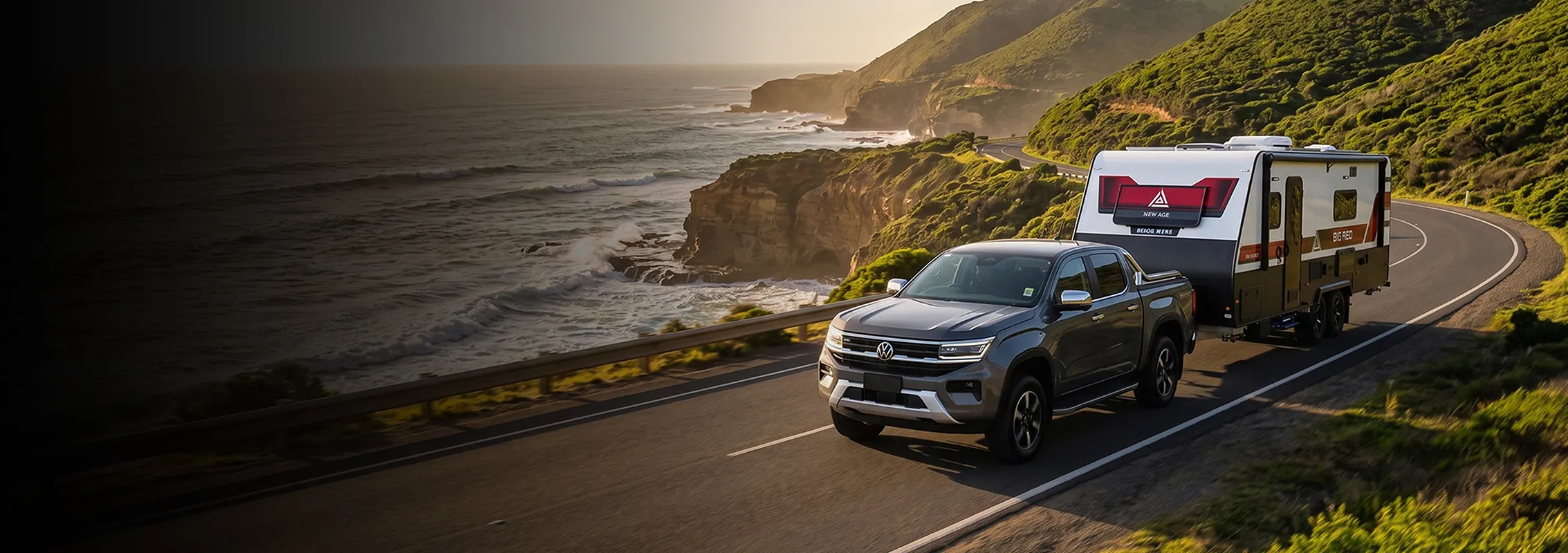
Free camping means staying overnight for free outside a paid park, at approved roadside rest areas, showgrounds and on some Crown land. It's allowed in many places but governed by state and council rules, usually with stay limits. To do it in comfort your van needs an off-grid setup: power, water and a way to handle waste.
What is free camping (and is it legal)?
Free camping is staying overnight at no cost outside a commercial park, rest areas, showgrounds, some national parks and Crown land. It's legal in many spots, but where and how long is set by state law and local councils, so it always pays to check the specific site.
There's no single national rule. One shire welcomes travellers at the showground; the next council over bans overnight stays in the same kind of car park. Approved roadside rest areas, town-run camps and many national parks are set up for it; private land, suburban streets and unmarked reserves usually aren't. The signage at the site, and the local council, are the authority, not a camping app.
Always check locally. Free-camping rules are set by state legislation and individual council by-laws, and they change. Before you stay, check the site signage, the relevant council, or the land manager (such as National Parks). This guide is general information, not a ruling on any specific site.
How long can you stay?
It depends on the site. Roadside rest areas are often 24-48 hours, showgrounds and low-cost camps vary, and national parks set their own limits. Commercial caravan parks have no limit. The signage at the site is the final word.
| Site type | Typical stay* | Cost |
|---|---|---|
| Roadside rest area | 24-48 hours | Free |
| Showground / sports ground | 1-7 nights | Low fee |
| National park camp | Set by the park | Fee |
| Caravan park | No limit | Paid |
*Indicative only, the posted limit at each site is what applies. Rest areas are meant for a rest on a long drive, not a week's stay, and rangers do move on over-stayers. If you want to settle in somewhere for longer, a showground or low-cost camp is usually the better call.
Can you live in a caravan on your own land?
Sometimes. It depends entirely on your local council. Many allow short stays or living in a caravan while you build, often with a permit and a time limit; others restrict it. Because the rules are set council by council, check with yours before you commit.
Some councils permit a caravan as temporary accommodation on your own block for a set number of days a year, or while an approved home is under construction; others require planning permission or don't allow permanent occupation at all. Services (water, waste, power) and how long you intend to stay usually decide what's allowed. It's a question for your specific council's planning department, not a general answer.
What your caravan needs to free camp
Away from mains power and taps, your van has to be self-sufficient: enough battery and solar to run your fridge and lights, fresh water on board, and a plan for grey water. How long you can stay off-grid comes down to how these are sized.
Power
Battery capacity plus solar to recharge it, enough to run the fridge, lights and pumps day to day.
Fresh water
On-board tanks you fill before you go. More capacity means more nights between top-ups.
Grey water
A tank or plan to catch sink and shower water, required at many sites, courteous everywhere.
Cooking & gas
Gas for cooking and hot water so you're not reliant on powered sites or fires.
Sizing all of this is its own topic, how many batteries, how much solar and how much water you need for the way you travel is covered in the off-grid setup you'll need. The short version: match your power and water to the number of nights you want to stay put, and free camping stops being a compromise.
Etiquette & self-containment
Free camping stays open to everyone only while campers look after the sites. That means leaving no trace, managing your grey water, and, in some areas, being certified self-contained. A few simple habits keep these spots available.
Do
- Take every scrap of rubbish with you
- Carry and dispose of grey water properly
- Use a dump point for the toilet cassette
- Keep noise and generators considerate
- Arrive late, leave early, park tidy
Don't
- Empty grey or black water on the ground
- Overstay the posted limit
- Light fires where they're banned
- Spread out across multiple bays
- Treat a rest area like a campground
Best regions & how to find free camps
The easiest way to find free camps is a camping app, WikiCamps and CamperMate list sites, reviews and facilities Australia-wide. From there, some regions are made for it: quiet Crown land inland, outback tracks and the coastal hinterland.
Open a camping app
WikiCamps and CamperMate map free, low-cost and paid sites across the country, with photos and traveller reviews.
Filter for what you need
Narrow by free camps, toilets, water, dump points, phone signal and whether it suits a caravan your size.
Read the recent reviews
Recent reviews tell you if a site is still open, still free, and still what the listing says, rules change.
Check the local rules on arrival
The site signage and any council notice are the final word on whether you can stay and for how long.
For a destination worth the practice, try the off-grid gems of the Flinders Ranges.
New Age vans built for off-grid
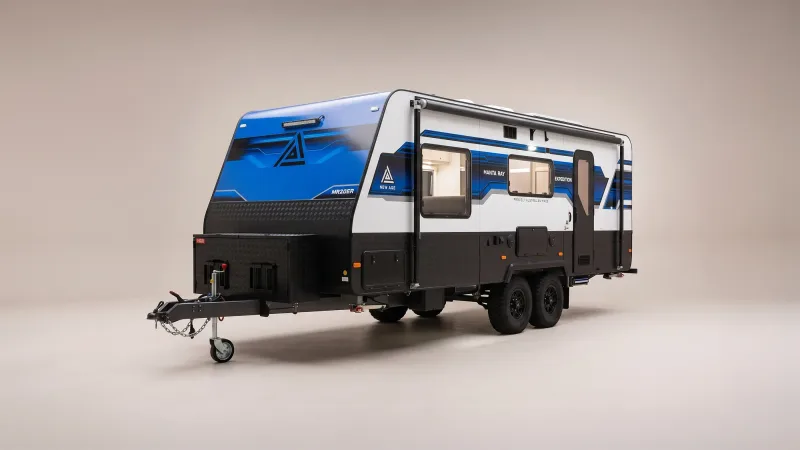
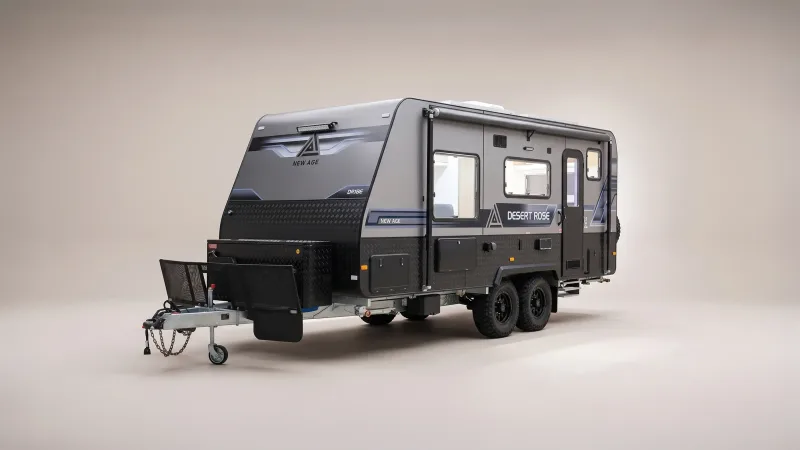
Free camping is only as good as the van behind it. New Age's off-road and off-grid-ready models carry the battery, solar and water to stay out longer. So the free camp stays comfortable, not just cheap.
If free camping is the whole point of your trip, start with a van that's set up for it. New Age's off-road range is built to carry the power and water that self-sufficient camping needs, and pairing it with the right off-grid setup is what turns a free rest area into a genuine base camp.