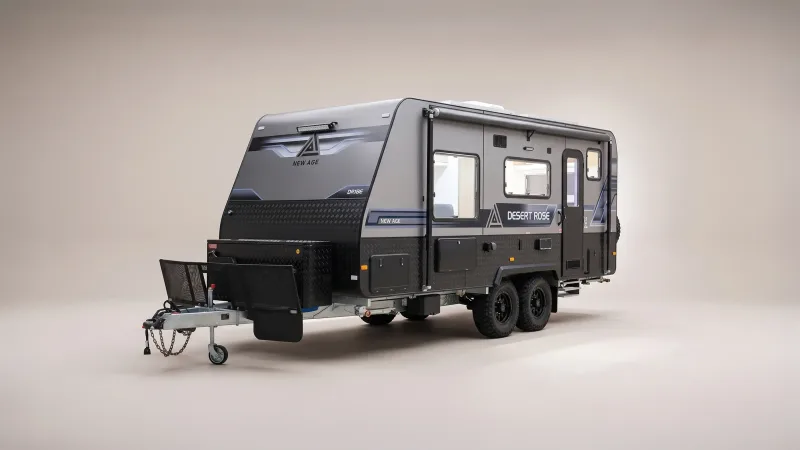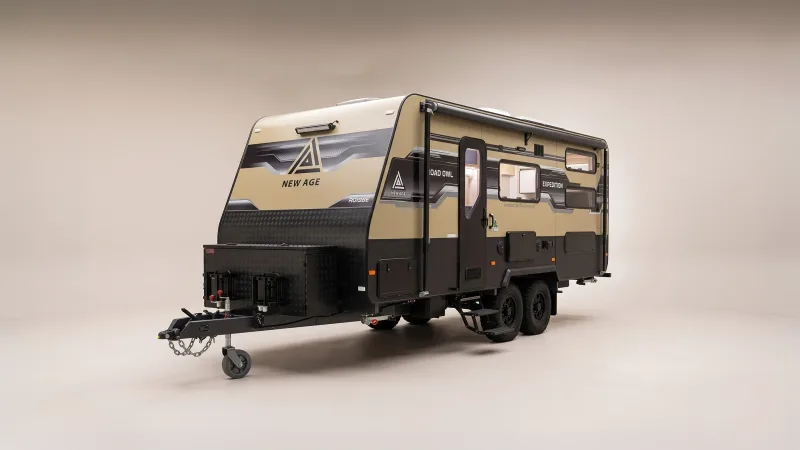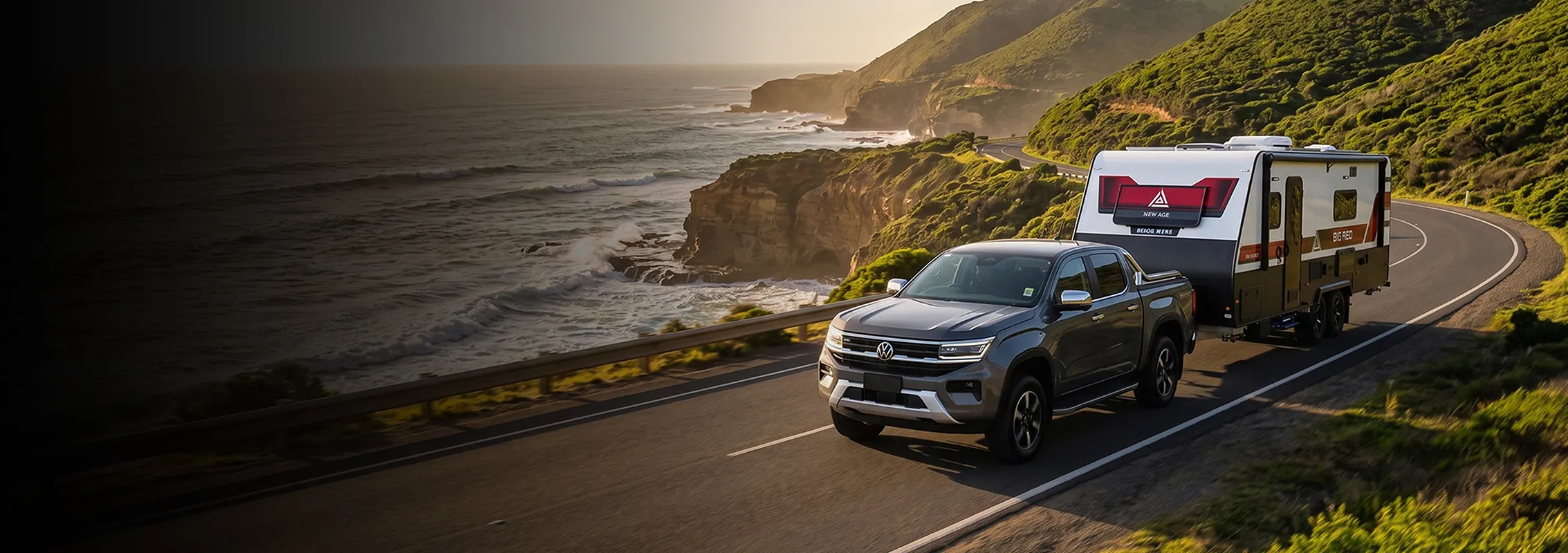
A hybrid caravan is a compact, off-road-capable van that blends a camper trailer's toughness and light weight with a caravan's hard walls, inside kitchen and fixed bed. It's built to tow easily, reach places big vans can't, and camp off-grid.
Hard walls
Solid composite walls, an inside kitchen and a fixed bed, caravan comforts, not canvas.
Light & compact
Shorter and lighter than a full caravan, so more cars can tow it and more places fit it.
Off-road build
Tougher suspension and clearance to handle gravel, corrugations and remote tracks.
Off-grid ready
Battery, solar and water to camp away from powered sites for days.
What is a hybrid caravan?
A hybrid caravan sits between a camper trailer and a full caravan: hard composite walls with a fixed bed and kitchen inside like a caravan, but compact, light and tough enough to tow off-road like a camper. The result is a van you can take further and set up faster.
The idea is to keep the parts of a caravan that make camp comfortable, walls you can stand behind in bad weather, a bed that's always made, a kitchen you don't unpack, while shedding the length and weight that keep a big van on sealed roads. You lose some living space; you gain reach.
Hybrid vs a full caravan
A hybrid trades interior space for capability. You give up the room, big bathroom and storage of a full caravan, and gain lighter weight, shorter length and genuine off-road ability. So more cars can tow it and more tracks open up.
Hybrid
- Lighter, shorter, easier to tow
- Built for gravel and off-grid
- Reaches remote camps
- Less interior and storage space
Full caravan
- More living space and storage
- Bigger bathroom, full kitchen
- Best on sealed roads and parks
- Heavier, needs a bigger tow car
Hybrid vs a camper trailer
Against a camper trailer, a hybrid gives you hard walls, an inside kitchen and a bed you don't set up, far less work at camp and better weather protection, for more weight and cost than a soft-floor or forward-fold camper.
Hybrid
- Hard walls, weatherproof
- Bed and kitchen ready to use
- Set up in minutes
- Heavier and pricier than a camper
Camper trailer
- Lightest and cheapest option
- Canvas, more setup, less weatherproof
- Great for occasional trips
- More work at every camp
Who a hybrid suits
Hybrids suit couples and small families who want to get off the beaten track without towing a big van, free-campers, off-roaders, and anyone whose tow car or driveway can't handle a full-size caravan. If you value reach and easy setup over living space, it's the sweet spot.
If most of your trips are sealed-road park stays with the whole family, a full caravan will live better. But if the appeal is the quiet, remote camp at the end of a gravel road, set up fast, off-grid, without needing a big 4WD to tow it, a hybrid is built for exactly that.
Off-grid & off-road ability
Hybrids are usually built for it: tougher suspension and clearance for corrugations, plus the battery, solar and water to camp off-grid. That's what lets them reach the remote sites bigger vans have to skip.
The off-road build and the off-grid systems go together. There's little point reaching a remote camp if you can't stay there. If free camping is the goal, our off-grid power guide covers sizing the battery, solar and water, and free camping in Australia covers where you'll use it.
Weight & towing
Their big practical advantage is weight. Many hybrids sit near 1,500-2,500 kg loaded (ATM), so a wider range of SUVs and utes can legally tow them. But you still check the numbers: ATM against your car's braked capacity, ball weight and GCM.
A lighter van is what opens a hybrid up to mid-size tow vehicles, but "lighter" still isn't "anything goes". Read caravan weights explained for the terms, then use what can your car tow? to match a specific hybrid's ATM to your vehicle before you buy.
New Age hybrids
New Age builds hybrids designed for exactly this, hard walls and inside comforts in a light, off-road-ready package. They're a natural fit if you want to tour off-grid without stepping up to a full-size van.
If a hybrid sounds like your kind of travel, start with the off-road range and check a specific model's weights against your tow car. The Manta Ray is a good light, easy-tow starting point to compare.