Buying a caravan comes down to six decisions: where you'll travel, how big a van you need, whether your car can tow it, how you'll power it, what it will really cost, and where you'll buy. This guide walks the whole journey and links to a deep dive on each step.
1 · Terrain
Where you'll actually travel, sealed roads, gravel or full off-grid, narrows everything else first.
2 · Size & layout
Who's coming and how you live decides length, beds and bathroom, and it's a towing decision too.
3 · Weights & towing
What your car can legally tow caps which vans you can buy. The make-or-break step.
4 · Power & water
Powered parks or off-grid free camps decide your battery, solar and water, and add weight.
5 · Budget
Price is the start; add on-roads, insurance, servicing, storage and the tow car.
6 · New or used
Warranty and exact spec, or a lower price with more checking. Same weight rules either way.
1. Where will you travel?
Start with terrain, because it narrows everything else. Sealed-road touring, gravel and semi-off-road, or full off-grid outback tracks each call for a different build, suspension, clearance, protection and water. Decide where you'll actually go most of the time, not the one big trip.
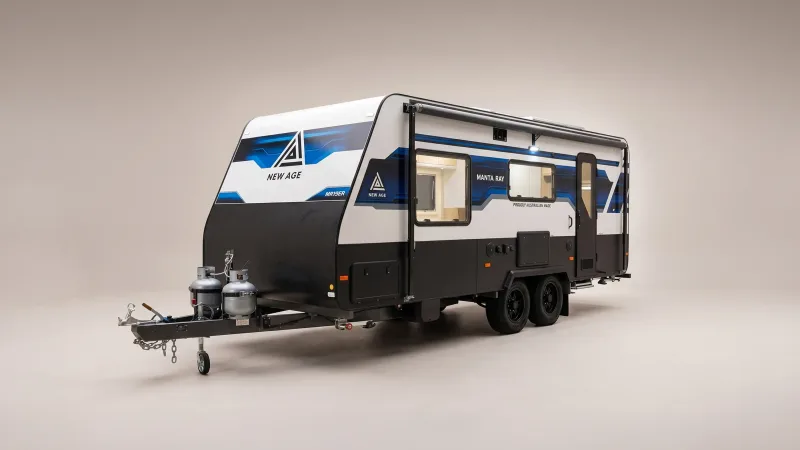
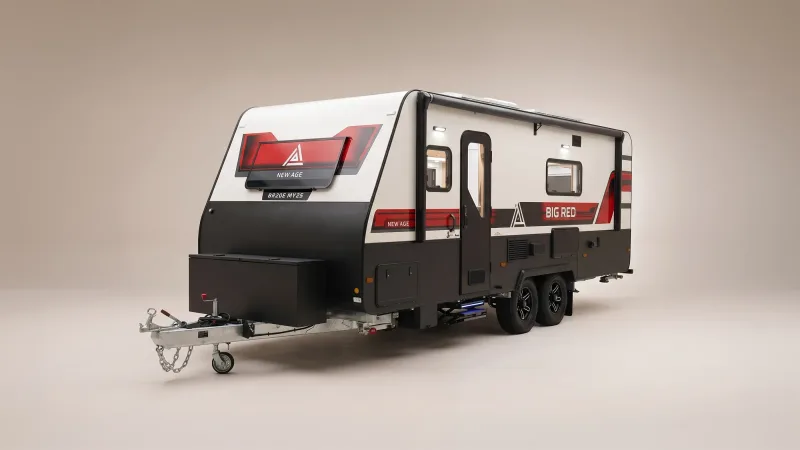
It's tempting to buy for the dream Cape York run, but a van built for serious off-road is heavier, pricier and tows harder than one built for coastal touring. Be honest about your real travel and you'll match the build to it, and keep weight and budget where they belong. New Age splits its range by terrain, from on-road to full off-road, for exactly this reason. If you want to reach remote country without a big van, a hybrid caravan is worth considering.
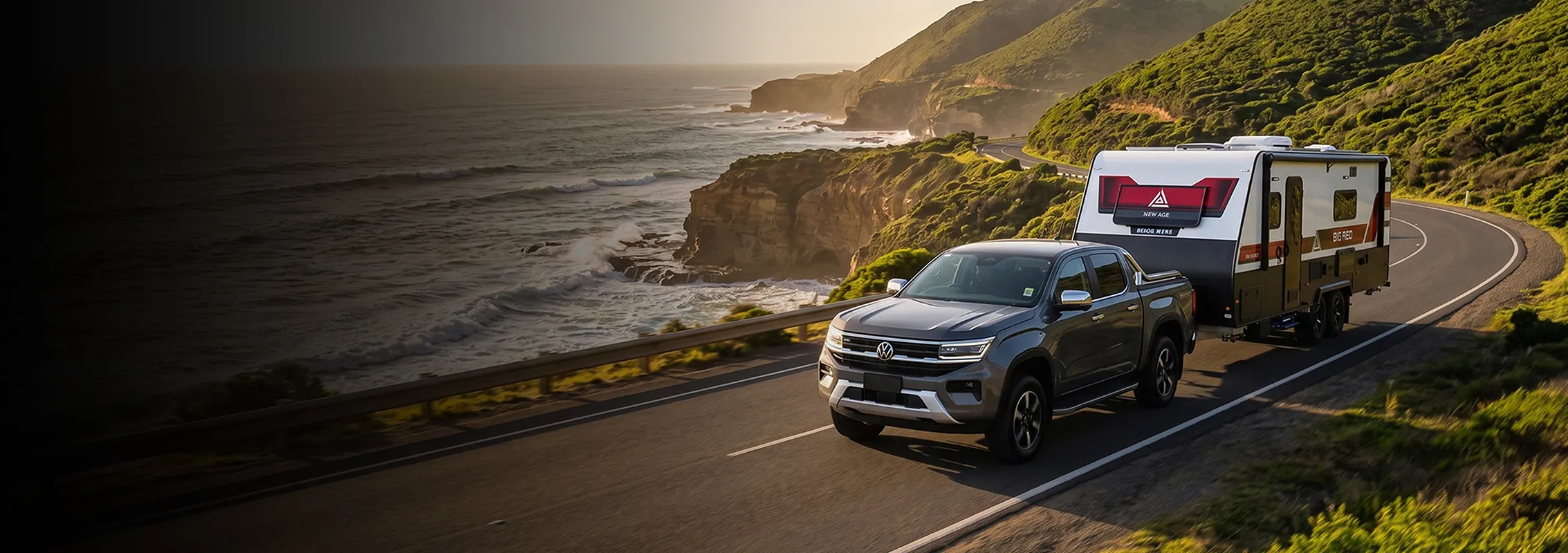
For a feel of what each kind of trip looks like, see the Great Ocean Road by caravan or Margaret River caravan parks for a sealed-road tour.
2. Size, layout & who's coming
Match the layout to who travels and how. Couples can go lighter and shorter; families need bunks and bathroom space; full-timers want storage and living area. A longer van tows and parks differently, so size is a towing decision as much as a comfort one.
Walk through a few layouts imagining a rainy day inside, not just a sunny inspection. Where do wet boots go? Can two people pass in the kitchen? Every extra foot of van is also extra weight and length to tow and reverse, so let the way you'll live, and your tow limit, guide the size, then see which layout suits you.
3. Weights & what your car can tow
This is the make-or-break step: your car can only legally tow so much, and that caps which vans you can buy. Learn the weight terms, then check them against your car's limits before you fall for a floorplan.
Do this early and you'll never waste time on a van your car can't pull. Two guides cover it in full: caravan weights explained decodes ATM, tare, GTM, payload and ball weight, and what can your car tow? shows how to match those numbers to your vehicle's braked capacity, towball limit and GCM.
4. Power, water & off-grid
How you camp decides your power and water. Powered parks need little; free camping needs a battery bank, solar and water on board. Off-grid capability also adds weight, so it loops straight back to your tow limit.
If you'll mostly stay in caravan parks, you can keep the electrical simple. If free camping is the plan, size the systems deliberately, our off-grid power guide walks through batteries, solar and water, and free camping in Australia covers where you'll actually use it.
5. Budget & running costs
The sticker price is only the start. Budget for on-roads, insurance, servicing, storage and the tow vehicle itself, plus the accessories every new owner buys. A cheaper van you can't tow, or can't afford to run, isn't actually cheaper.
Cost the whole setup, not just the van. A lighter van that your existing car tows comfortably can beat a bigger one that forces a new vehicle. Add the running costs across a year, servicing, tyres, storage, registration, and the true budget comes into focus well before you sign anything. Our finance & running costs guide breaks down the whole picture.
6. New or used?
New gives you warranty, current compliance and exactly the spec you want; used saves money but needs careful checking of weights, water damage, service history and the compliance plate. Either way, the weight and tow-match rules are identical.
A used van can be great value if it checks out. But inspect the compliance plate, look hard for water ingress, and confirm the real weights suit your car just as you would on a new one. Ordering new lets you spec the layout and weights to your vehicle from the outset, which is often what makes the tow-match easy.
Inspecting & ordering
Whether new or used, inspect in person: check build quality, weigh it if you can, and read the compliance plate. Ordering new lets you spec weights and layout to suit your car and your travel from the start.
Settle your terrain and travel style
On-road, semi-off-road or full off-grid. This sets the build and the budget band.
Set your weight budget
Work out what your car can tow first, so every van you look at already fits.
Shortlist layouts that fit
Choose floorplans within your size and weight limits that suit who's travelling.
Inspect, and weigh if you can
Check build quality and the compliance plate; confirm the loaded weights suit your car.
Order or buy
Spec a new build to your car and travel, or complete your checks on a used van.
Build your shortlist
With terrain, size, weight and power settled, the range filter turns all of it into a two-minute shortlist of New Age vans that fit your car and the way you travel.
You've done the hard thinking, now let the numbers do the sorting. Filter the range by terrain and tow weight to see only the vans that suit you, then book a walk-through with a dealer to see your shortlist in person. Not sure where to start? Which New Age is right for me? narrows it in four questions.